Artificial Light Transition: Moving Plants Between Natural and Grow Light Environments
Moving plants between natural light and grow lights needs care to avoid stress. Start with low-intensity artificial lights and slowly increase exposure, mimicking how sunrise gradually brightens your garden. Pay attention to leaf color changes - yellowing means too much light, while pale foliage suggests you need more. Keep the environment stable with consistent temperature and humidity as plants adjust. Once they’re comfortable under grow lights, experiment with different PPFD levels based on their growth stage: 100-300 µmol/m²/s for seedlings, up to 600-1000 for flowering plants. As you fine-tune the light, notice how your plants respond, and remember that what works for one species might not for another - so be patient and let nature guide you.
Notable Insights
- Gradually increase artificial light intensity and duration to mimic natural dawn/dusk transitions and prevent shock.
- Monitor leaf color changes and growth patterns to adjust light levels and spectra for optimal photosynthesis.
- Use LED grow lights with full spectrum coverage (380nm-800nm) to replicate natural sunlight while adjusting PPFD based on plant stage.
- Maintain stable temperature, humidity, and ventilation when transitioning plants to artificial lighting environments.
- Prioritize red and far-red light during flowering phases and ensure proper drainage to support plant adaptation to new light conditions.
Understanding Light Spectrum Requirements for Different Plant Species
Whether you’re growing tomatoes or orchids, understanding light spectrum requirements isn’t just about brightness-it’s about matching plants to their perfect wavelength partners. Each plant species has unique light needs based on growth stages, from seed germination requiring red light to flowering phases needing more red and far-red. Light intensity levels also play a crucial role in determining how effectively plants utilize these spectra for photosynthesis and development. Customize spectra with LEDs to balance blue for compactness and red for blooms. Environmental factors like climate and shade avoidance also influence how plants respond to light intensity and ratios. Modern LED grow lights provide full spectrum coverage from 380nm-800nm, supporting all growth phases from seedlings to flowering with the flexibility to adjust light types for specific plant requirements. Experiment with layering techniques or seek expert guidance to find the ideal spectrum for your collection-watch as your garden transforms!
Optimizing PPFD Levels for Efficient Photosynthesis Without Stress
As you refine your lighting strategy, balancing PPFD intensity with plant resilience becomes essential-especially when nurturing seedlings that need gentle care versus mature plants demanding robust illumination. Lower PPFD levels (100-300 µmol/m²/s) support seedling development without causing light stress, while higher intensities (400-600 µmol/m²/s) optimize photosynthesis efficiency during vegetative growth. PPFD balance is crucial for preventing both under- and over-exposure, as either can hinder growth outcomes. Monitor leaf temperature closely, as excessive PPFD can elevate it to stressful levels. For flowering plants, aim for 600-1000 µmol/m²/s but prioritize ventilation to manage heat. Adjust gradually and observe plant responses-healthy growth signals proper lighting, while bleaching or curling indicate overexposure. Supplementing your lighting optimization with balanced fertilizers ensures plants receive essential nutrients to support the increased photosynthetic activity under artificial lighting conditions.
Adapting Plants to Artificial Light: A Step-by-Step Protocol
After setting the right PPFD levels for your plants, the next step is helping them get used to artificial light in a way that feels natural. Start with low-intensity lights and gradually increase exposure over several days - this supports plant acclimatization without causing stress. Mimic dawn and dusk by slowly brightening and dimming lights to reinforce their circadian rhythm. Observe how your plants respond: yellow leaves signal too much light, while pale foliage suggests it’s not enough. Adjust the light adjustment process based on these signs. Remember, artificial light needs to mimic natural sunlight with the right spectrum for photosynthesis. With patience and careful monitoring, your plants will thrive under grow lights just as they would in the garden.
The Role of Photoperiod in Supporting Natural Growth Cycles Indoors
Did you know that how long your plants bask in daylight can shape their entire lifecycle? The photoperiod importance extends far beyond just providing energy-it guides flowering timing, growth patterns, and even dormancy. For indoor gardeners, understanding this helps create conditions that mimic nature, supporting natural cycles like indoor flowering. Tomato plants thrive with 14–18 hours of light daily, while others need shorter periods to bloom. By carefully managing day length, you can control when your plants flower, set fruit, or even rest. This guarantees they stay healthy and productive year-round in a controlled environment. When transporting plants between indoor and outdoor environments, using heavy-duty wheelbarrows makes moving large containers and garden supplies much more manageable for serious gardeners.
Monitoring Physiological Responses During Light Environment Transitions
When shifting plants from natural to artificial light environments, their physiological systems don’t just adapt-they transform, as the very way they capture and use light undergoes remarkable reprogramming. Monitoring these responses through physiological indicators like chlorophyll content, stomatal behavior, and anthocyanin production reveals how plants acclimate to changing light conditions. Light acclimation involves complex adjustments-repositioning chloroplasts, boosting energy dissipation mechanisms, and altering growth patterns-all of which require careful observation. By tracking these changes, growers can optimize adjustment periods and support healthier plant development under artificial lighting.
Selecting the Right Grow Light Type Based on Energy Efficiency and Spectrum Output
Three key factors determine the best grow light for your plants: energy efficiency, spectrum quality, and environmental impact. LED advantages include superior energy savings, using half the power of HID lamps for equal light output. HID limitations make them less efficient and hotter, requiring extra cooling. Spectrum adjustments matter most-LEDs let you fine-tune red/blue ratios or add UV-A for specific plant responses.
Consider your space: LEDs stay cooler, reducing heat stress on plants. Their long lifespan cuts replacement costs, especially in commercial grows. While initially more expensive, the energy savings and reduced environmental impact make LEDs a smart investment.
Match your light type to your plants’ needs, and you’ll watch them thrive under optimized care.
Enhancing Flavor, Color, and Nutritional Content Through Spectral Tuning
Although many growers focus on basic growth requirements, spectral tuning offers a powerful way to elevate your plants’ quality. By adjusting the light spectrum, you can enhance flavor enhancement through UV and blue light exposure, which boosts terpenes and essential oils. Red light also increases sugar content in fruits, improving sweetness. For color vibrancy, blue and UV promote anthocyanins for rich reds and purples, while red light keeps foliage green. Nutrient optimization comes from spectral effects like UV boosting antioxidants and vitamins. Experimenting with tuned spectra can transform your garden’s taste, look, and nutritional value-without sacrificing yield.
Creating Microclimates That Mimic Natural Conditions for Stress-Free Plant Development
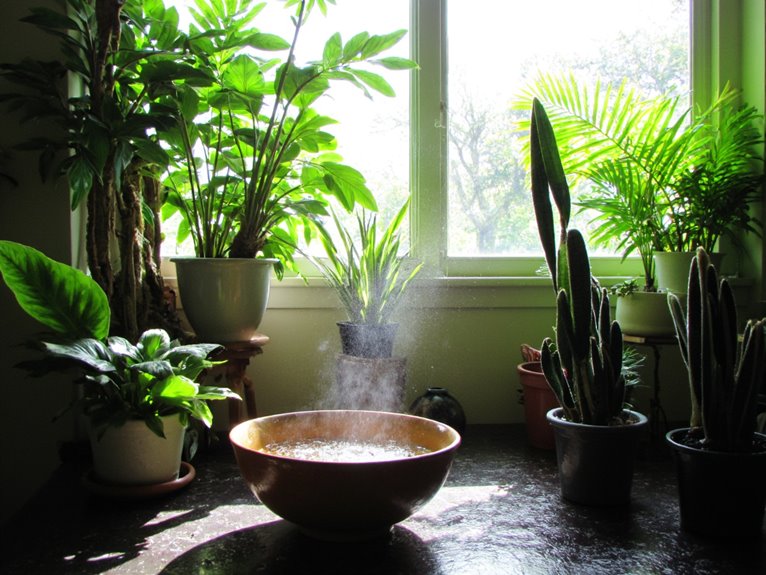
Whether you’re cultivating tropical specimens or temperate favorites, creating microclimates that closely replicate their natural environments can dramatically reduce stress and improve plant development. For humidity management, pebble trays and shallow water dishes elevate moisture levels naturally, while humidifiers offer consistent control. Grouping plants enhances transpiration, mimicking rainforest understory conditions. Pair these with mini fans for balanced airflow and avoid overwatering by keeping pots above water sources. By carefully crafting microclimate creation through light placement, temperature stability, and soil optimization, you’ll help plants thrive with minimal shock-just like they’d be growing in their native habitat.
Frequently Asked Questions
What Are the Effects of Green Light on Plant Canopy Growth?
You’ll see green light impacts plant canopies by deepening photosynthesis, triggering shade avoidance like stem elongation, and shaping root growth that influences canopy structure. Its effects on development balance light use efficiency with morphological responses as plants adapt to their environment.
How Do UV Components Influence Crop Flavor Profiles?
UV exposure ramps up flavor compounds in crops, making your harvest taste better. The light quality-like blue and UV-enriched-shapes how plants produce those tasty notes. You’ll notice more citrus or pepper flavors with the right setup. Taste enhancement isn’t just nice-it boosts market value too.
What’s the Optimal Red-To-Blue Light Ratio for Flowering?
What’s the ideal red-to-blue light ratio for flowering? Most plants benefit from a 5:1 red spectrum benefits ratio, with blue light importance maintaining structure and photosynthesis. Cannabis prefers 3:1, while Hippeastrum needs higher blue to accelerate blooms.
Can Natural Light Intensity Be Accurately Replicated With LEDS?
Can natural light intensity be accurately replicated with LEDs? Not entirely-LEDs excel at targeted light spectrum control but struggle to match sunlight’s broad range and intensity. While efficient for specific plant needs, they fall short of replicating the full solar spectrum and dynamic changes found in nature.
How Does Light Penetration Affect Lower Canopy Photosynthesis?
Light penetration greatly impacts lower canopy photosynthesis – when light can’t reach these leaves effectively, their ability to produce energy decreases. You’ll notice poor light distribution creates canopy shading, limiting photosynthesis in lower layers that often receive insufficient sunlight.
On a final note
As you shift plants between light environments, remember patience builds resilience. By understanding spectral needs, optimizing PPFD levels, and mimicking natural photoperiods, you create conditions where plants thrive rather than struggle. With careful monitoring and thoughtful lighting choices, your indoor garden can flourish-offering vibrant colors, rich flavors, and nourishing harvests that reflect your care and attention to their light-based needs.